

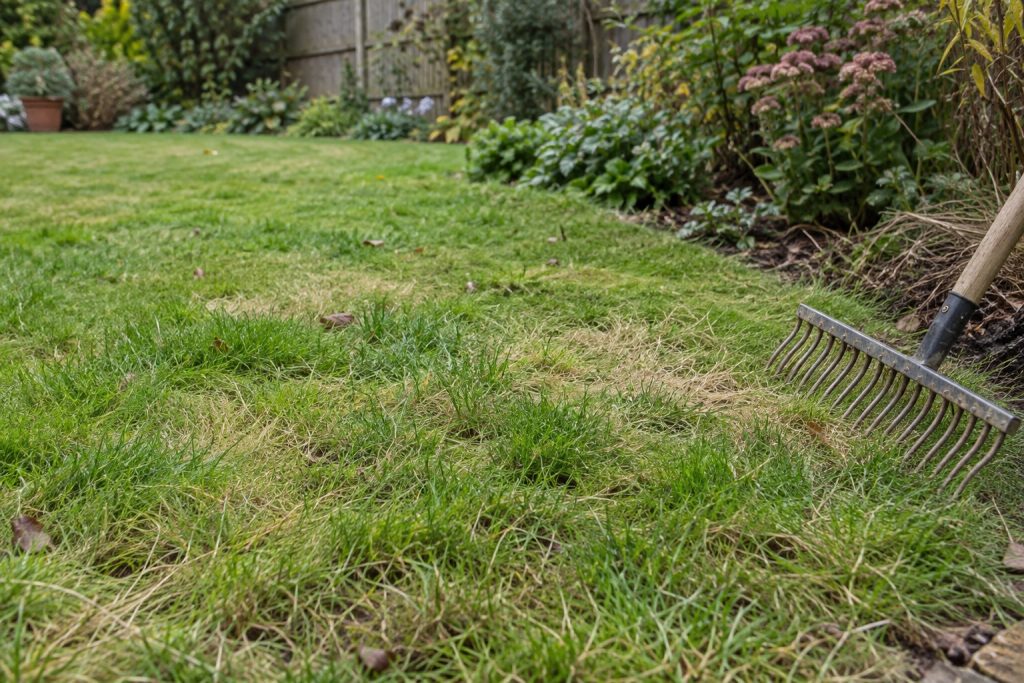
A dry spell can leave even a well-kept lawn looking tired. If yours is brown, thin or patchy, the first step is to understand what needs attention before choosing a treatment.
Start with an assessment
Brown grass is not always dead. Established lawns often regain their colour when rain returns. Areas that remain sparse may need repair, so it helps to look at the lawn’s condition and moisture levels before starting work.
Repair where it is needed
Our Lawn Recovery Programme starts with a review of your lawn. Where conditions are suitable, scarifying removes built-up thatch, while overseeding introduces grass seed into thin or bare areas. The approach depends on what we find; every lawn does not need the same treatment.
Feed only when appropriate
More fertiliser is not always the answer. We assess whether feeding is needed as part of the recovery plan. We avoid feeding drought-stressed turf and consider a light, season-appropriate feed only where the lawn’s condition and recovery justify it.
Plan beyond the first visit
Recovery is a process, and the weather and condition of the lawn influence how it develops. Our programme includes a review in spring 2027 to assess progress, identify any remaining needs and plan the next steps for the growing season.
A tailored plan for your lawn
Platts Maintenance provides lawn care for gardens and commercial grounds across Surrey, South London and West Sussex. Tell us how your lawn has changed, which areas concern you and whether you are looking for one-off help or ongoing care.
Explore our Lawn Recovery Programme or get in touch to discuss your lawn.
Further reading: RHS advice on lawn care in drought and autumn lawn care.